
20 June 26
Volunteers
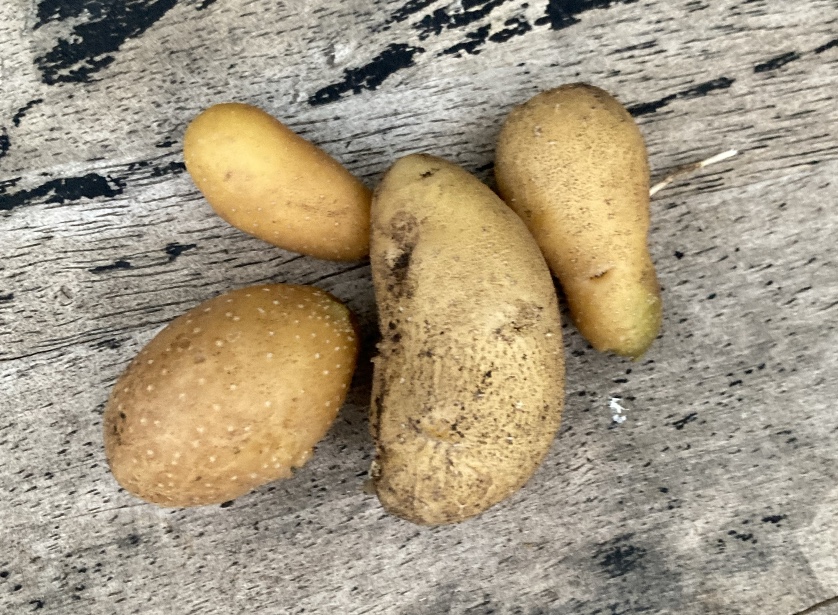 I somehow have encouraged potatoes to grow in two separate plots, and they keep coming. These were pulled today from a bed I thought was now empty except for the tomatoes. Sigh. It’s likely there are some lurkers that will turn into more plants. Don’t get me wrong, I like potatoes (and we steamed a few to put in a salad yesterday); it’s just that I’d like to observe a bit of rotation so we don’t have nightshades in every bed (I have chiles growing in the other bed where several potato plants are now putting in an appearance).
28 May 26
Feral Potato
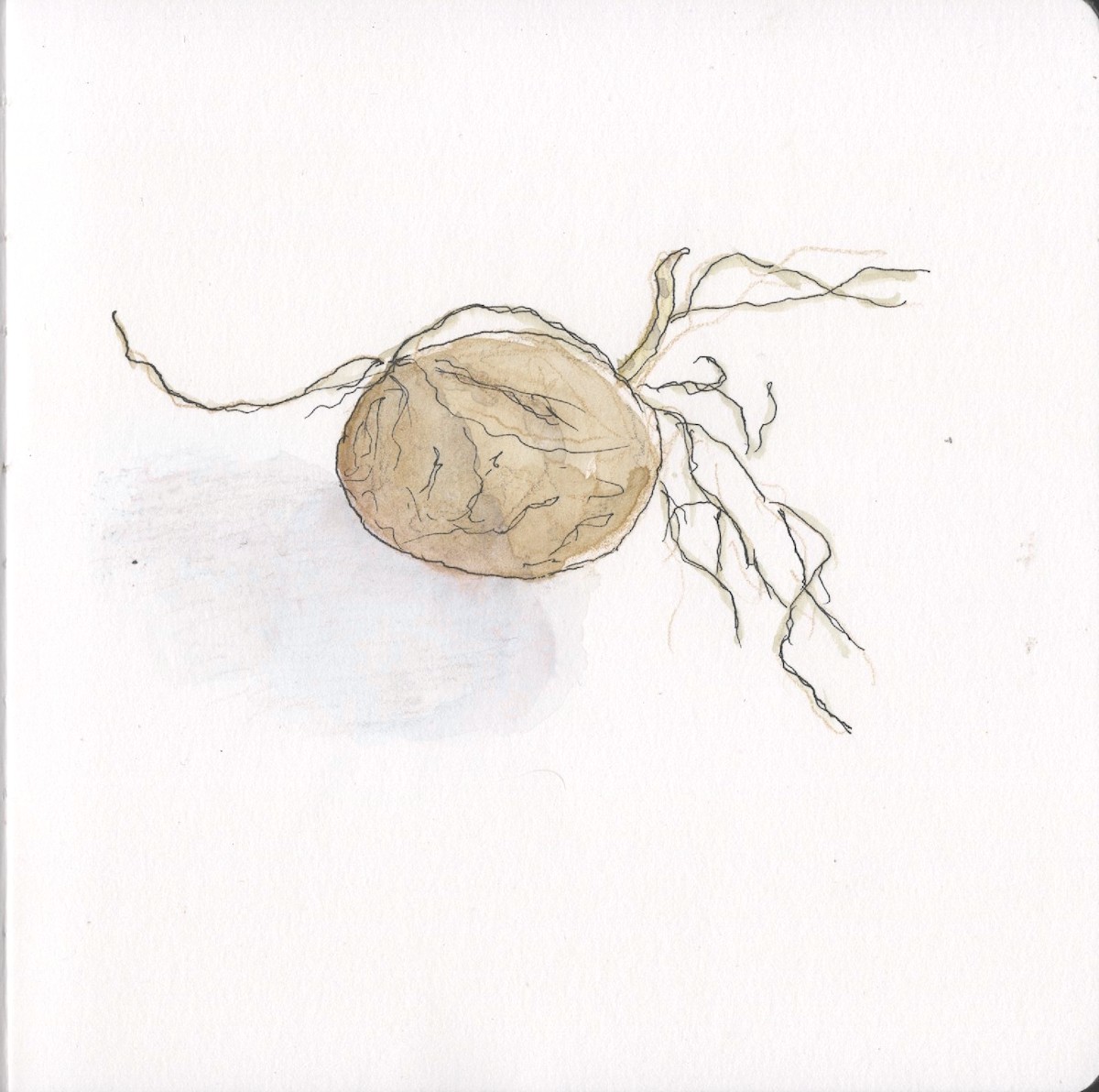 As Pica mentioned yesterday, she unearthed some volunteer potatoes growing from soup leavings used as compost for one of the flower beds. Here is a sketch of one of them.
Lately I have been using black ink in my pen and wash sketches — for some reason I want strong contrast in my linework right now. This is sketched with De Atramentis black ink in a medium Pilot Metropolitan fountain pen.
27 May 26
Weather in May
Yesterday afternoon a thunderstorm dumped half an inch of rain onto us in five minutes. There is no more “normal” weather other than that everything is getting more extreme. I was able to get into one of the flower beds this morning and pull the last of the delphiniums in order to put in some chili peppers (and found five buried potatoes, which made their way into the soup).
One of the roads through Yosemite is now closed because of snow — I’m usually pleased to hear about snow in the mountains but it’s getting late enough to start affecting nesting birds. It will be hot again soon.
14 May 26
Hollyhocks
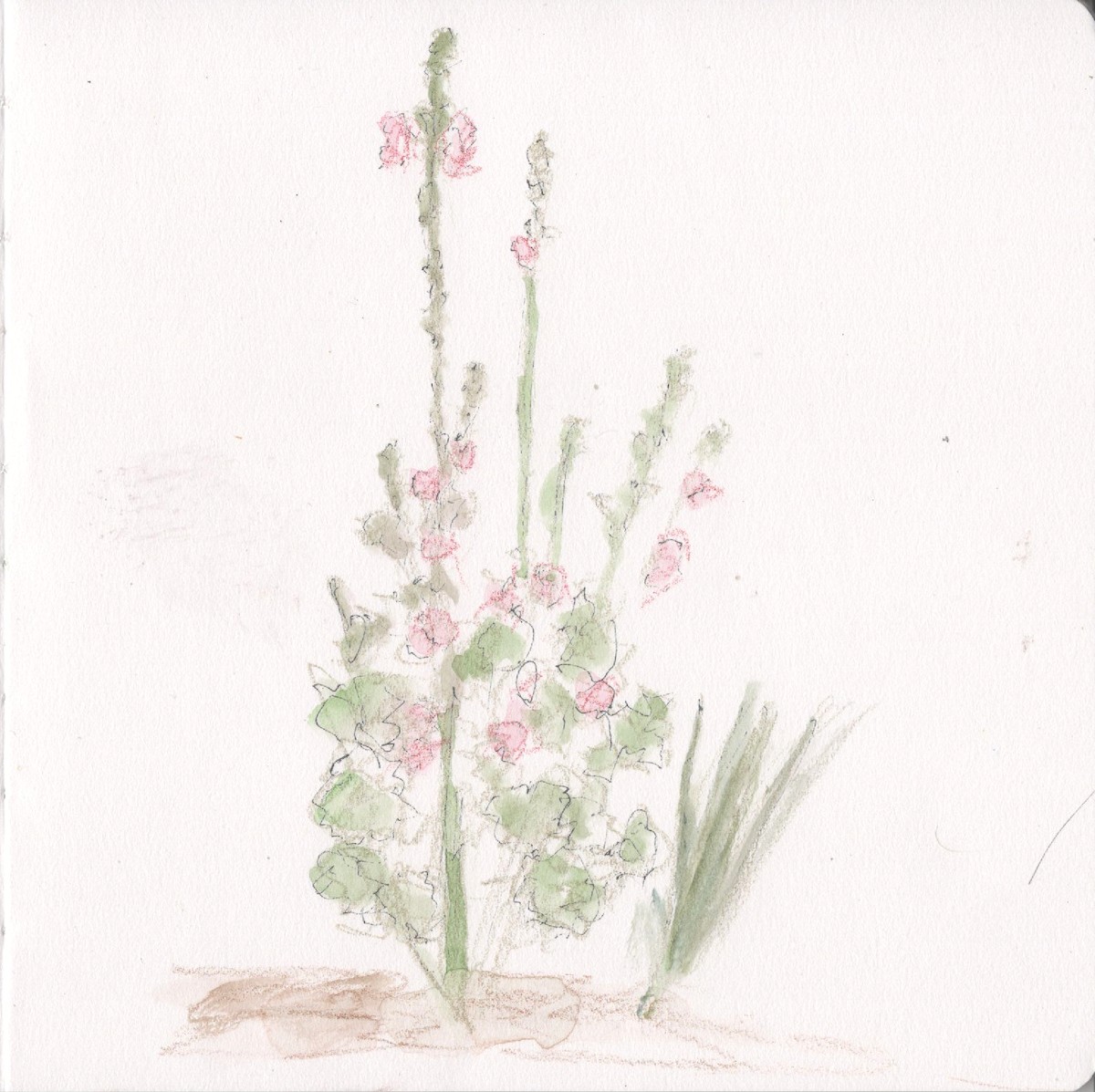 Hollyhocks are in bloom throughout our neighborhood now, including some straggly plants in our backyard. This is a sketch of some hollyhocks growing in a little public garden across the street from our house. This is my second field sketch using my new Folio Palette kit. It’s nice to have lots of colors to choose from between the 26 colors in the filled pans and my expanded colorful set of Derwent drawing pencils.
16 April 26
Delphiniums Arrive
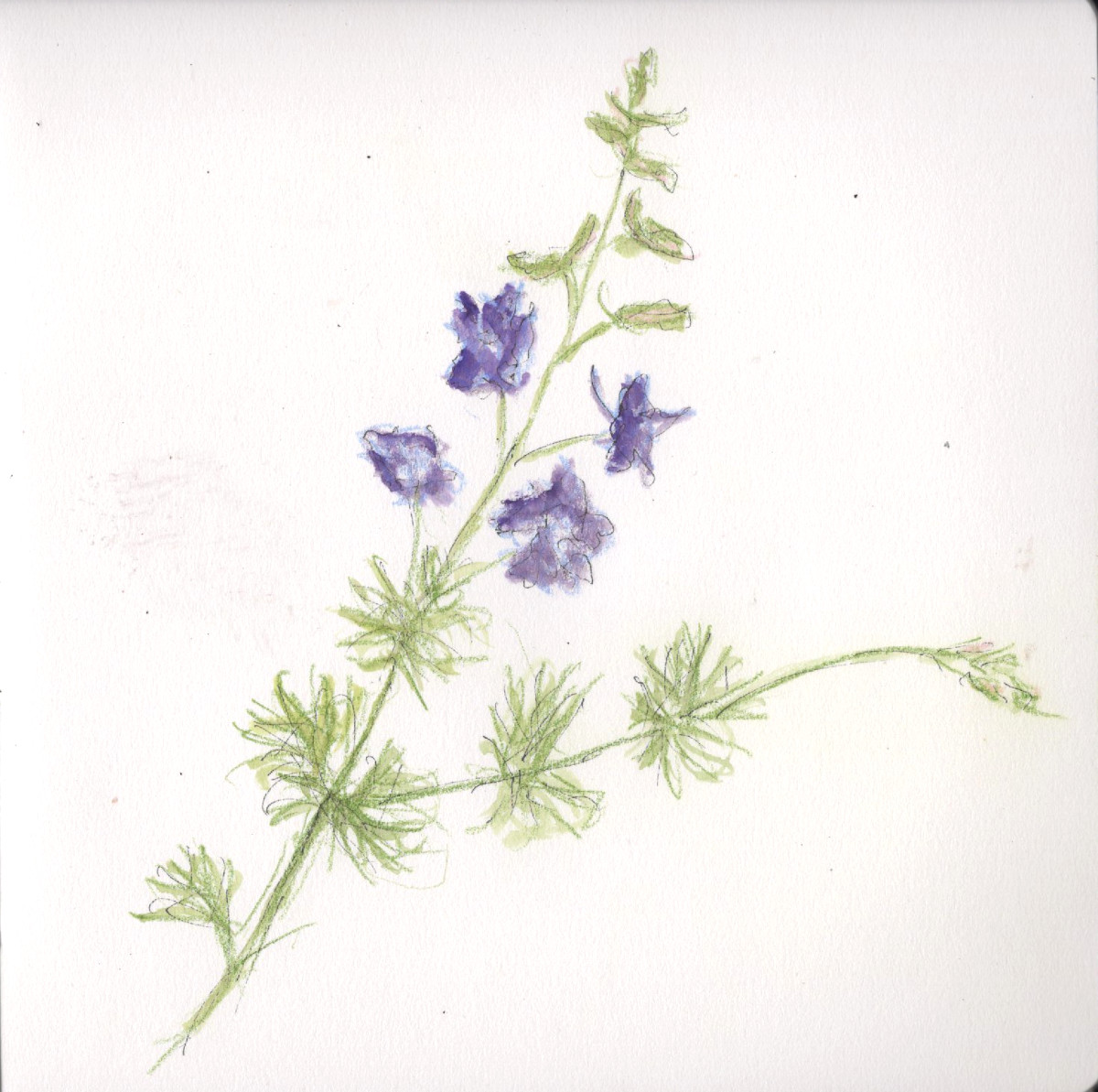 The planter box in our backyard has been taken over by delphiniums, which are starting to bloom now. This is sketched with Derwent drawing pencil, a 0.1mm fineliner, and watercolor wash.
5 February 26
A New Tree Arrives
 Some twenty months ago, the apricot tree in the southeast corner of our garden collapsed and had to be taken out completely. This left a vacant and unshaded spot in the garden, which was somewhat ameliorated by the placement of a redbud tree by the garden fence. But today a new sapling arrived which was planted in a more central location in the yard. This is a pineapple guava tree and it is pretty tall already. I sketched it with ink and watercolor pencil.
30 January 26
Rejuvenation
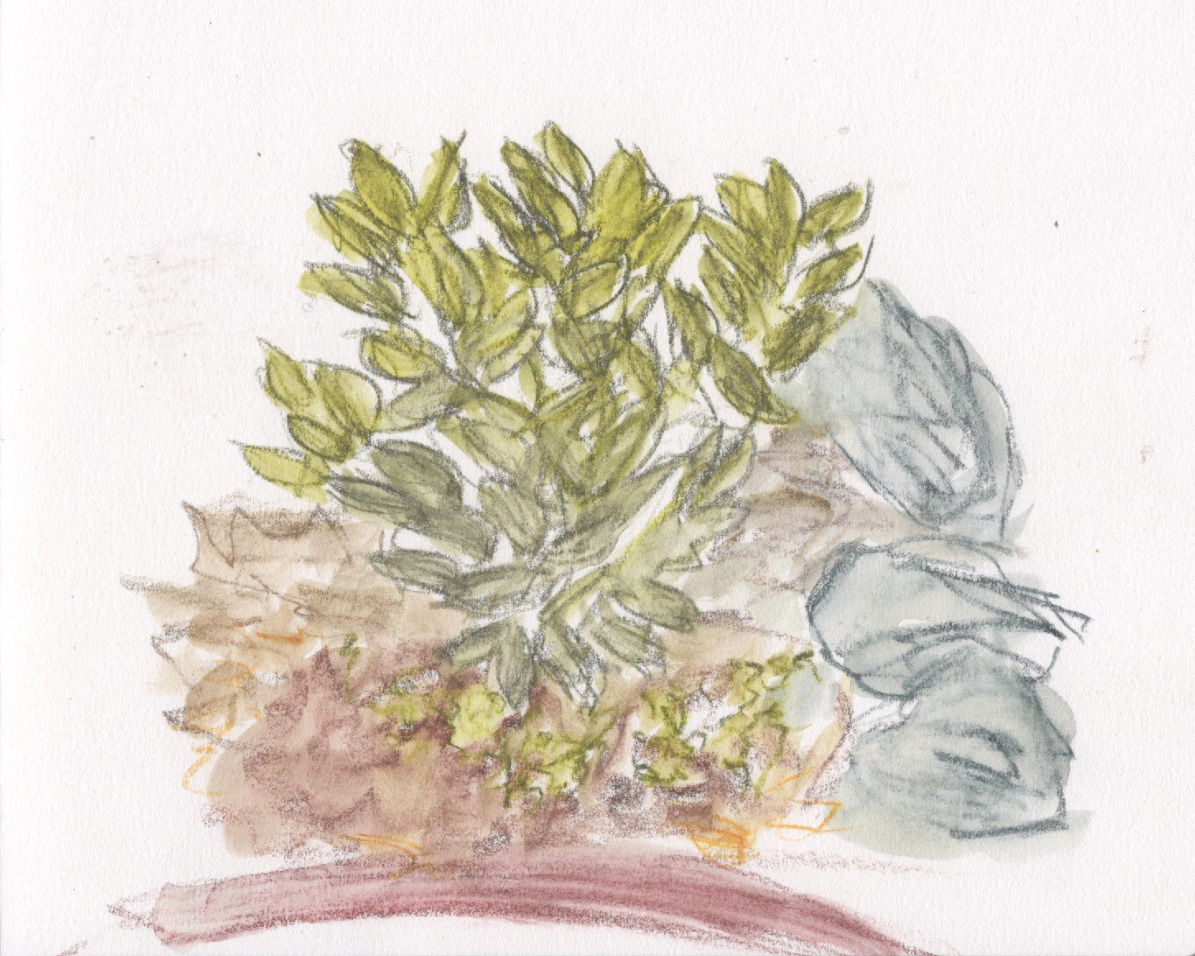 Several years ago Pica planted a pineapple guava in a bed in our backyard. But then a none-too-astute landscaper hired by our landlady came along and hacked it all the way to the ground in a fit of shrub trimming. Happily over the past year it has been growing back and it is now looking pretty happy. Here is a sketch of it from today done with Derwent Graphitint pencils.
27 March 14
Pollinators in the Garden
Last week we attended a workshop put on by the California Center for Urban Horticulture on Gardening for Pollinators. A full morning of talks followed by a trip to the Honey Bee Haven, followed by a trip to the Arboretum Plant Sale (for the record, we bought a manzanita, three Spanish lavenders, a giant buckwheat and an ericameria). All but the lavenders should grow into large shrubs that qualify as four feet, and the lavenders should end up filling that slot.
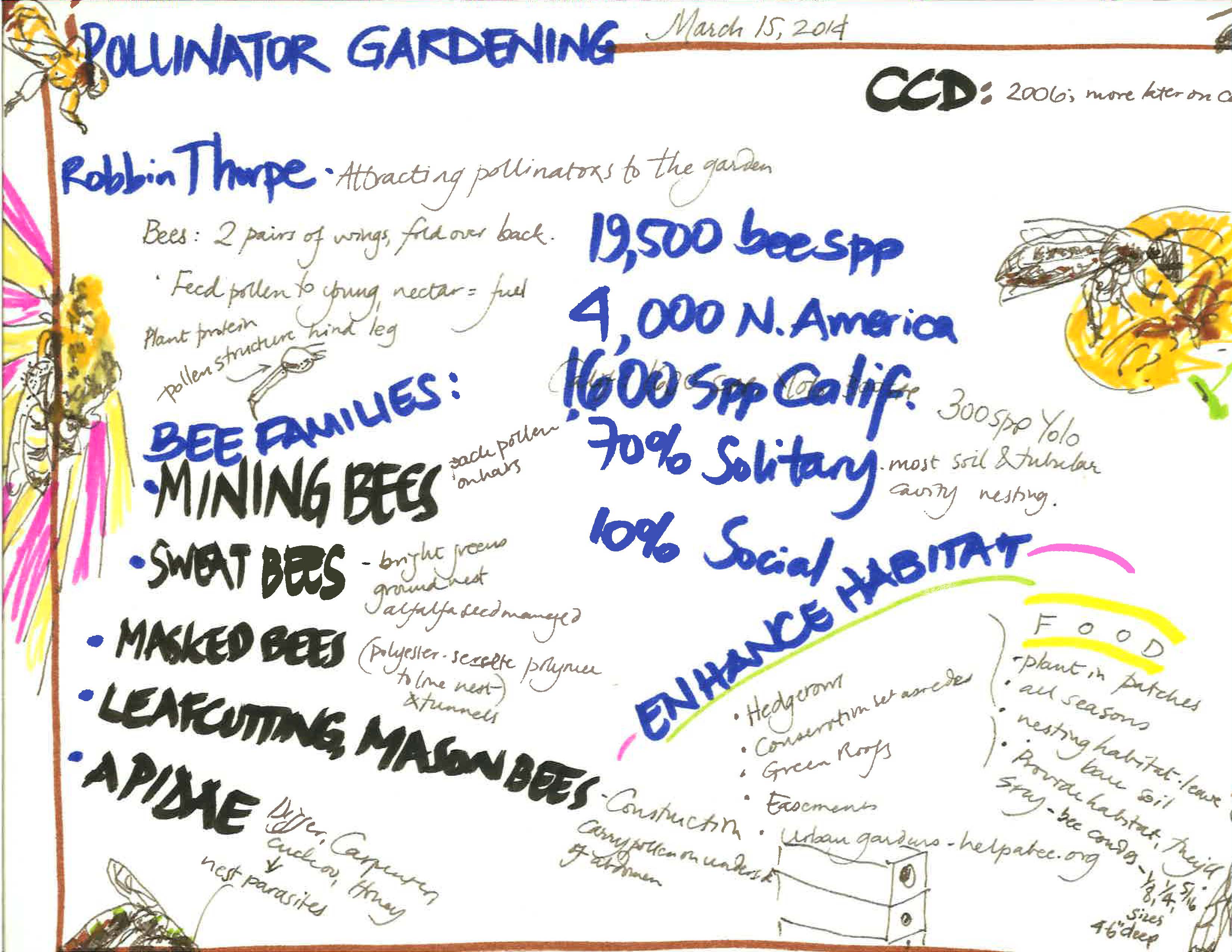 I’ve written a blog post for the ANR Green Blog that provides more background, but here are the big take-homes for me from the workshop…
- Planning for succession blooming (in the Central Valley, that means late winter through fall)
- Putting plants in clumps at least 4 feet long if possible (honeybees, especially, like to specialize)
- Putting in plants that provide both nectar and pollen (nectar is fuel for adult bees, pollen is protein for the young)
- Using native plants where possible; they’re drought tolerant and have what our native bees need
- Avoiding most-toxic pesticides and herbicides
- Providing a clean source of water (a slow-dripping tap on a sloped surface is ideal; bees like to drink from very shallow sources)
- Providing cavity nest holes in wood for carpenter and other bees
- Leaving some areas of gardens unmulched for ground-nesting bees
16 November 13
From Field to Flour
Two years ago we started getting involved with Farm 2.6, a new educational community farm a few miles west of Davis. I had the odd idea then of putting in a small wheatfield, with the idea of baking some bread from wheat I had grown myself. Today I ground my first batch of flour from the wheat!
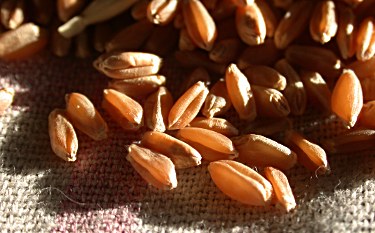 There is a reason why grains do not figure in most home gardening efforts, despite being an important diet staple. It is an awful lot of work to produce grains in any sort of quantity at all. (For those who are nevertheless still interested, one good text is Gene Logsdon’s Small-Scale Grain Raising). The timeline of our efforts was as follows. In late winter of 2012 we sowed the field in red clover as a cover crop and to put nitrogen into the soil. It then lay fallow until late January of this year, when we planted the field in a hard red spring wheat. It didn’t end up as a very densely planted field, and there were many, many weeds in it, but wheat we got, and several of us harvested it by hand in early July. The wheat then sat in the barn until last week when at a work party it was threshed and winnowed. The threshing was done by dancing on the heads of the wheat placed in a pillowcase; the winnowing was done with the aid of a small fan. The resulting wheat berries are at left.
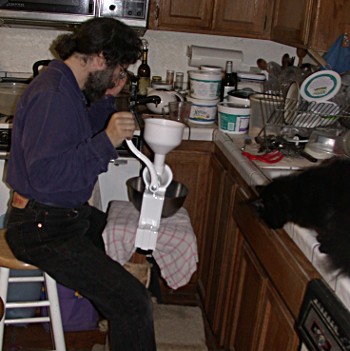 We have a small hand-cranked grain mill at home and I set to grinding today. This too is hard work, and in about an hour-and-a-half I grinded about 3 cups of flour. I ended up borrowing one of our pieces of cat furniture to clamp the mill to; the cats were curious what use I was making of it. Below is some of the flour. Next up comes baking a loaf of bread!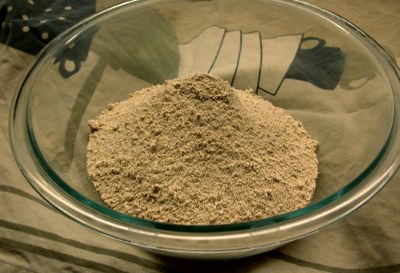
22 August 11
Melons, Squashes, Beans, Okra, Tomatoes, Feral Chard, &c
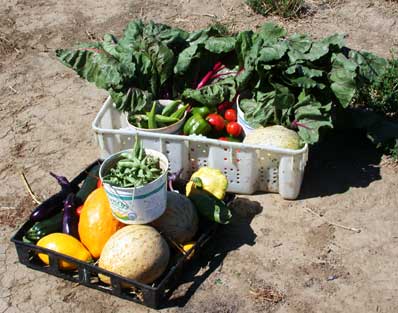 I can’t keep up. The squirrels are going to eat the melons unless we harvest them and the beans hide behind every leaf. The okra is getting bigger than is good for its being appetizing.
Very late tomato season this year, but now it’s making up for it…