
17 March 26
Newspaper Machinations In The City
I am continuing to work my way through Gray Brechin’s book Imperial San Francisco. Being from the Bay Area, I’ve gone on numerous outings to the M. H. de Young Memorial Museum which is the fine arts museum located in Golden Gate Park. I didn’t know a thing about M. H. de Young before I read Chapter 4 of the book. Here are my notes from it.
- Contra what San Francisco Chronicle publisher Richard Tobin Thieriot said in 1990, lenses refract rather than reflect reality; the three San Francisco newspaper clans all agreed the city must grow and property values rise.
- Michael and Charles de Young arrived as adolescents during the Civil War. The brothers founded the Daily Dramatic Chronicle with a borrowed twenty-dollar gold piece. Their father who didn’t join them in San Francisco was of Dutch Jewish background. Michael claimed aristocratic descent but didn’t fit into upper-class Gentile society nor the pecking order of the German Jews around Temple Emanu-El.
- In its formative years the Chronicle lampoons the wealthy and goes after monopolists.
- As a result the de Youngs get hit with many criminal libel suits. The favor of the Chronicle becomes something to be curried.
- Charles de Young gets into a libelous spat with popular Baptist minister Isaac Kalloch. Kalloch calls the de Youngs “the bastard progeny of a whore born in the slums and nursed in the lap of prostitution.” Charles de Young shoots Kalloch at point-blank range in front of his church. Kalloch recovers and is elected mayor; after de Young resumes accusing Kalloch of adultery Kalloch’s son goes and shoots Charles de Young dead. A jury acquits young Kalloch on grounds of reasonable cause.
- Michael de Young goes after “sugar king” Claus Spreckels with stories about virtual slavery on Hawaiian plantations and swindling their stockholders. Claus’s son Adolph snaps and shoots Michael de Young. He is badly injured but is saved because he was carrying a package of books. Adolph was acquitted on grounds of reasonable cause. Ambrose Bierce writes “Hatred of de Young is the first and best test of a gentleman.”
- Mining mogul George Hearst takes over the San Francisco Examiner to help him become U.S. Senator. His son William Randolph Hearst takes over management in 1887. He has an eye for talent and a lust for power. In the 1890s the Examiner becomes the leading paper in Northern California.
- The block of Market, Kearny, Geary and Third becomes newspaper row.
- Claus Spreckels buys the San Francisco Call. His son John takes over. They speak for the Progressive wing of the Republican party, and keep tabs on the peccadilloes of the Chronicle’s owner. It turns out the Chronicle was incorporated in Nevada rather than in California, making it difficult for plaintiffs to sue de Young.
- In 1894 de Young clears a 180 acre site in Golden Gate Park for a Midwinter Fair that architect Willis Polk calls an “architectural nightmare”.
- de Young owned land north and south of the west end of the park and hoped for skyrocketing land values with the Fair.
- Hearst hires muckraking Scots journalist Arthur McEwen who uncovers the story of de Young’s long-forgotten brother Gus who is rotting away as a pauper in an insane asylum in Stockton.
- The Fine Arts building at the Midwinter Fair remains standing to become San Francisco’s first public art gallery. In time this morphs into the M.H. de Young Memorial Museum. de Young was an incurable collector of everything.
- After the victory in the Spanish-American War, the Chronicle promotes “The Imperial Future of California.”
- Corruption in City Hall (Mayor Eugene Schmitz and attorney Abraham Ruef.) The Bulletin funded by Rudolph Spreckels, goes after them but then starts going after the bribe-givers. The city’s elite turn against this investigation.
- The prosecution gets stopped because it is damaging business and tourism.
- The Chronicle in its society pages starts to rehabilitate reputations, including Patrick Calhoun. Calhoun had a syndicate that wanted to build an electric interurban between San Francisco and Sacramento. The state railroad commission blocked this since Calhoun didn’t want his ledgers which contained evidence of bribery to be examined.
- The Chronicle and the Examiner collude to buy out the Call, and de Young is rid of the media presence of Spreckels.
- Michael de Young was never able to move in with the Hillsborough set, but his four daughters were able to marry into it.
- The Chronicle’s society pages were able to define who constituted the city’s “us.” Its communications empire expanded well beyond the Bay Area, with secretive holdings and value.
- In 1995 Michael de Young’s granddaughter Nan Tucker McEvoy held more than 26% of the stock of the company and wanted to move the publication more to the center. Private corporate intrigue follows: McEvoy is voted off the board, McEvoy sues her cousins, and this is settled behind closed doors out of court.
- The Chronicle would always champion new expansion, even though there were considerable environmental and social costs.
Afterword: The de Young museum is now managed by the Fine Arts Museums of San Francisco together with the California Palace of the Legion of Honor, which is on a hill in the extreme northwest corner of the city. The latter museum was built between 1921 and 1924 and is a three-quarters scale copy of the Palais de la Légion d’Honneur in Paris. It was a gift from Alma de Bretteville Spreckels and Adolph Spreckels. I am speculating that the Spreckels built the Legion of Honor so as to upstage Michael de Young, though I do not have a source for this.
11 March 26
The Thirst of San Francisco
I have been reading Imperial San Francisco by Gray Brechin, which is a history of the long shadowy reach of the development of San Francisco. It is an excellent book, and a good reminder that corruption of the elite did not begin with Donald Trump. Here are my notes on Chapter 2, which is about water development.
- The Sunol Water Temple was built in 1910 modeled after the Temple of Vesta at Tivoli northeast of Rome; its funder William Bourn had second generation wealth and a sense of civic responsibility.
- San Francisco has very little water in its territory; a financier named George Ensign got legislation to create private companies to claim water rights-of-way through eminent domain. Thus we get the Spring Valley Water Works.
- San Francisco County originally extended to the border of Santa Clara County, but in 1856 the legislature created San Mateo County. The city elite wanted San Mateo back. They diverted Pilarcitos Creek.
- Hermann Schussler becomes the chief water engineer at Spring Valley Water Works.
- William Ralston wanted an urban park but did not really like Frederick Law Olmsted’s suggested design.
- The civil engineer William Hammond Hall gets obsessed with building Golden Gate Park.
- Hermann Schussler builds an aqueduct from the Sierras to Virginia City, thus aiding one of Ralston’s rivals.
- Schussler recommended acquiring water rights to the Alameda Creek watershed.
- In a bold gambit Ralston acquires the rights to Alameda Creek, wanting to sell the water company to the city.
- In August 1875 there is a bank run on Ralston’s bank encouraged by William Sharon; Ralston is bankrupted and disgraced and dies swimming in San Francisco Bay.
- William Sharon (also senator from Nevada) manages to emerge from Ralston’s ruin with most of Ralston’s assets and few of his liabilities. He becomes one of California’s wealthiest men.
- Sharon dies in 1885. There is a spectacular estate battle involving a woman named Sarah Althea Hill, who claimed to be married to Sharon. Hill loses this case and eventually ends up in an asylum; much of Sharon’s estate winds up with Francis Griffith Newlands, Spring Valley’s attorney.
- Newlands takes up residency in Nevada and become congressman there. He starts to develop Burlingame as a luxury enclave for the elite of the West. Lots sell quickly there after the depression of 1890 ebbs. Hillsborough gets carved from Burlingame to become an even more exclusive town.
- The Hillsborough set is second-generation wealth, heavily intermarried and extremely secretive.
- But Hillsborough needs water for its estates and horses, not even Alameda Creek suffices.
- Newlands understands that the water has to come from distant sources, which requires taxpayer funding. James Duval Phelan, a fellow elite Progressive, becomes a proponent of this.
- Phelan is elected mayor of San Francisco in 1896, and wants to consolidate the Bay Area into “Greater San Francisco” a la the boroughs of New York. But this requires a great aqueduct.
- Phelan becomes fixated on Hetch Hetchy Valley on the Tuolumne River in Yosemite National Park.
- Newlands leads passage in Congress of the National Reclamation Act, launching the agency now known as the Bureau of Reclamation. This agency’s first project is in Nevada, not surprisingly.
- Down south, Fred Eaton, William Mulholland, and J.B. Lippencott quietly acquire water rights for Los Angeles at the expense of the farmers of the Owens Valley.
- Phelan’s claims for a reservoir within Yosemite National Park are thwarted by the U.S. Secretary of Interior.
- The 1906 San Francisco earthquake occurs. It is clear the city will quickly be rebuilt, and Phelan’s plan has a lot more support.
- The debate over Hetch Hetchy is bitter, pitting John Muir and the Sierra Club on one side and much of the Bay Area on the other side.
- City voters approve a $45 million bond issue in January 1910, but federal legislation for the dam construction doesn’t pass until December 1913. Hetch Hetchy does exactly what it is designed to do – raise land values.
- Michael M. O’Shaughnessy becomes San Francisco city engineer and leads the Hetch Hetchy project.
- Huge cost and time overruns on the Hetch Hetchy project, partly because the initial bond measure was lowballed to ensure voter passage.
- The water finally arrived in 1934. O’Shaughnessy had been stripped of power by his enemies. O’Shaughnessy dies in October, 18 days before dedication day for the water project. A new water temple is built in San Mateo County, the Pulgas Water Temple; it is a mile north of William Bourn’s estate, Filoli.
25 February 26
Tecumseh and the Survival of Native Nations
I just went to a talk at the UC Davis Alumni Center entitled “Tecumseh and the Survival of Native Nations” given by the historian Kathleen DuVal. DuVal’s most recent book is entitled Native Nations: A Millennium in North America and won both the Pulitzer Prize for history and the Bancroft Prize in 2025, as well as a couple of other history prizes. She also got her history PhD at UC Davis in 2000, and her talk today was something of a homecoming — there was a contingent in the audience who knew her from her graduate school days here.
I have not yet read Native Nations, but it was clear from her talk that as a retelling of Native American history it emphasizes the individual identities of sovereign Native nations, a characteristic that continues to be important today. She illustrated this with a photograph from the Standing Rock protests in 2016 showing flags from all the tribes who had assembled together. Her talk today was about the visionary Shawnee leader Tecumseh who along with his brother the religious leader Tenskwatawa (often known as The Prophet) tried to build a unified Native confederacy to resist the incursions of white American settlers into the lands beyond the Appalachians at the beginning of the 19th century. Tecumseh was a great orator and many listened to him and the prophesies of his brother, but overall their call for unification did not win out over sovereignty. Tecumseh ends up dying fighting with the British against the Americans in 1813. Tenskwatawa moved across the Mississippi and dies in Kansas in 1836. But the Native nations persist, and by the late twentieth century Native Americans have three identities in varying degrees: that of their tribe or sovereign nation, that of being a U.S. citizen, and of being a Native American.
23 February 26
Transcriptions Completed
A week ago Friday, I learned about the Douglass Day transcription project and promptly joined this crowdsourced effort to transcribe printed documents related to the series of Black political organizing conventions in the 19th century. The big push for this project was on Friday the 13th, but volunteers continued on and yesterday finished transcribing the entire collection. There were 1,445 volunteers who transcribed text from 3,416 images of documents. I ended up transcribing 32 documents over 10 days.
I am really happy with the way the effort turned out. This was a way to participate in Black History Month, the volunteers quickly got through the collection, and I discovered that online transcription is a contribution path towards increasing the accessibility of historical archives. It turns out there are plenty of opportunities to do this sort of thing online, through programs at the Library of Congress, the National Archives, the Smithsonian Institution, and other places I’m sure. I will be looking into these.
13 February 26
Douglass Day
Thanks to running across a post on BlueSky this afternoon, I ended up doing a bit of crowdsourced history this afternoon. When Frederick Douglass passed away in 1895, an activist named Mary Church Terrell led a effort to create a holiday celebrating Douglass’s birthday every February 14th. This holiday eventually grew into Black History Month. Starting in 2017, Douglass Day was revived as a way to bring participation into the Colored Conventions Project, a collaborative effort to surface the 19th century history of Black political organizing conventions.
One of the ways this effort is participatory is by running transcribe-a-thons of documents from the Colored Conventions during Douglass Day. This years’ effort was coordinated by the UC Santa Barbara Department of English and the UCSB Library. They are running this effort through Zooniverse, which is a platform famous for hosting crowdsourced research projects. As of this writing they’ve had 964 volunteers for the 2026 effort. I signed up on Zooniverse and transcribed five documents this afternoon. I’ll be doing more over the rest of this month.
11 February 26
Unsettling Memoryscapes
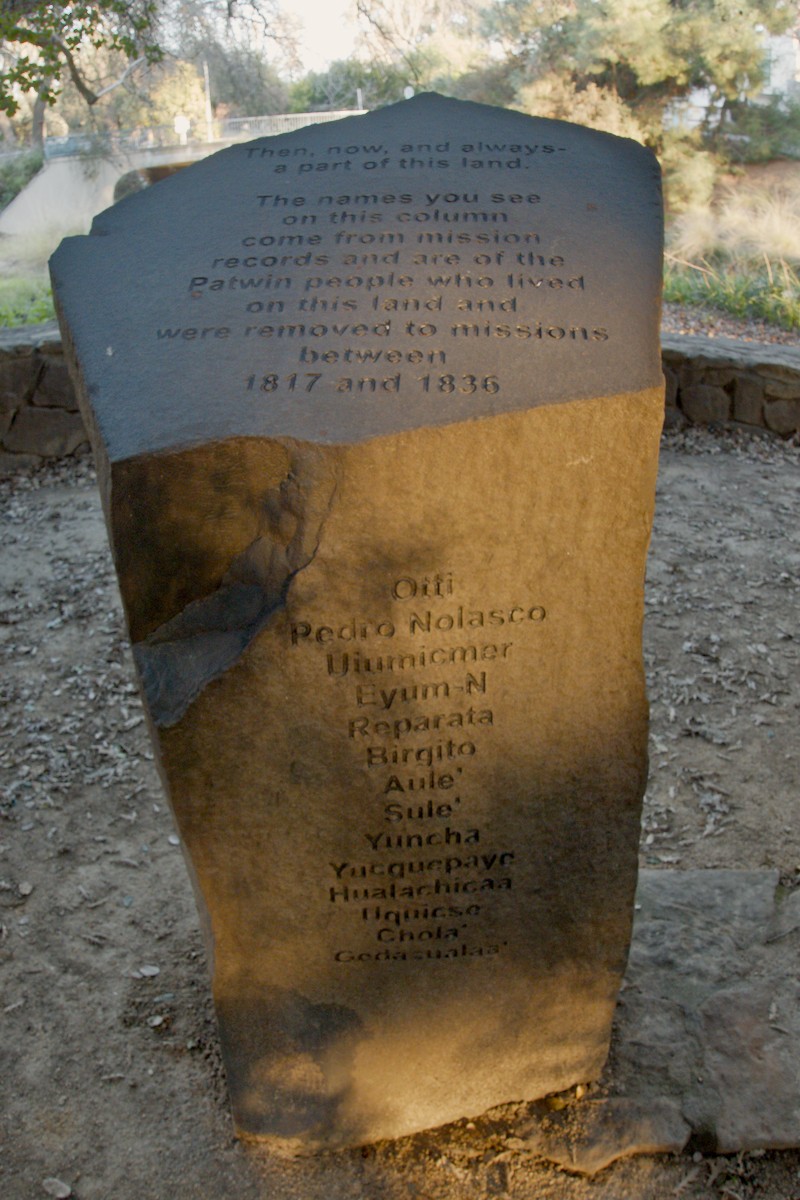 I have just finished taking notes on a couple of books I recently read to understand more of the context of my ancestral entanglements with Native Americans of the northeast. The books are Memory Wars: Settlers and Natives Remember Washington’s Sullivan Expedition of 1779 , by A. Lynn Smith (2023) and Memory Lands: King Philip’s War and the Place of Violence in the Northeast by Christine DeLucia (2018). Both books examine place, memory, and commemoration following two distinct violent events, namely the scorched-earth campaign in 1779 ordered by Washington against the Haudenosaunee peoples of Western New York, and the hugely destructive King Philip’s War in 1675 in New England. Memory Wars focuses on the monuments that were placed throughout Pennsylvania and New York starting in the late 19th century to commemorate the Sullivan Expedition. Memory Lands considers local history and memory of several sites of trauma from the war, namely Deer Island in Boston Harbor, the Great Swamp in Rhode Island, the Connecticut River Valley in Western Massachusetts, and Bermuda. The two books treat place and memory from the perspectives of both the white settlers and Native Americans.
A couple thoughts from reading these books. Memoryscapes operate in parallel and different people in different communities will bring different meanings to a place and its history. And there is always a history behind monuments and markers. Who were the people who placed them? What were their values, and what sort of power was behind them?
(The photo shows a marker from the Native American Contemplative Garden in the UC Davis Arboretum.)
25 January 26
Under the Banner of the Goddess
In 1979 my sister travelled across the United States with two guys, one of whom was an archeologist. They had an interesting stop in Salt Lake City where they toured a museum focusing on Mormon history. For those unfamiliar, Mormon doctrine holds that ancient Hebrews traveled to the New World and became the Nephites and the Lamanites, the goodies and the baddies among the Native Americans, the baddies having the dark skin that was “the mark of Cain.” Needless to say there is no archeological evidence anywhere in the Americas to support this, that great battles between these two factions had taken place, a fact which my sister’s friend was quick to point out (a waste of breath as it always is when confronted by the iron-clad certainty of religious belief).
Her story of this event was the first time I’d ever heard of the Mormons or, as they prefer to be called, the Church of Jesus Christ of Latter-Day Saints. I went on to read about them (Under the Banner of Heaven by Jon Krakauer was my first introduction to one of the fundamentalist wings of the LDS Church, one that still practices polygamy, and I have also been following various podcasts here and here over the past year or so).
The story is fascinating to me because Mormons are famously good at documenting their history, raising the question of the veracity of all revealed religion. Their founder, Joseph Smith, supposedly had the Book of Mormon dictated to him by an Angel, or he found buried gold plates which contained the text of the book (which nobody else ever saw), receiving the translation by looking inside a hat. Smith had been a fraudulent treasure seeker in upstate New York before he found religion in the early nineteenth century. (He was also a voracious sexual predator, marrying at least 30 women, some of whom were in their early teens, some of whom were already married to other men.)
L. Ron Hubbard, the founder of Scientology, once said “You don’t get rich writing science fiction. If you want to get rich, start a religion.” The LDS church is a high-demand religion where unless you pay 10% of your income to the church, you are excluded from some of the highest privileges of worship, including access to the LDS temple. The result has been exploding financial growth in a church that now owns about 4% of public land in the United States and whose net worth is over $200 billion, wealth accrued not just from tithes but also from aggressive investment in tech and real estate, somewhat inconsistent with the notion that churches are accorded non-profit designations.
Religious belief is a fundamental human right. It is also true that patriarchal religions have done untold harm across the centuries, inflicting violence in the form of Crusades and other holy wars across the world, torture under the Inquisition, murder especially of women accused of witchcraft for over five hundred years, and the abuse of children on the part of clergy, protected by the very institutions charged with protecting the young.
There is now a vocal ex-mormon presence online, intent on exposing abuses and injustices inflicted on members by the patriarchal authority of old (very old) white men. By all metrics, the LDS church qualifies as a cult by Steven Hassan. Though some of the rules demanded of members seem quaint (no coffee, no alcohol, weird holy underwear), others, such as a virulent anti-gay and anti-trans agenda, are more harmful (gay teen suicides are rife in Utah; the millions of dollars poured into defeating California’s gay marriage initiative in 2008 led many young members to leave the church in droves, a massive miscalculation on the part of the church leadership). I personally have a big problem with any church intent on missionary work especially in developing countries, but Africa is a rich recruiting ground for the LDS church (though how many converts persist in their faith 10 years after their baptism is an interesting question). I also have a revulsion toward the practice of baptisms for the dead, ANY dead, your grandparents, your family who died in the Holocaust.
Curiously, though, LDS doctrine also holds that God has a wife, the Goddess, or Heavenly Mother as she is known to Mormons, a being who has given birth to billions of human spirits. Members are discouraged from praying to her or even from talking about her; it seems that a patriarchal religion that goes so far as to posit a woman of power is so afraid of her that she is made invisible. Mormon women are leaving the church in high numbers. But it doesn’t matter: the church doesn’t need their tithes anymore, not with all that accumulated wealth…
21 December 25
From Space Into Time
As I’ve mentioned in my posts on Zettelkasten, I have begun an open-ended research adventure. Two months into this journey, I have figured out that I want to do history — a shift for me from being a spatial data analyst of present-day conditions to tracing threads in the past. In some ways this is coming full circle for me, since my route into the field of geography involved a deep dive into the concept of landscape and landscape history.
What sort of history and where? The where is most likely California, since I grew up here and live here and travel to archives is easier (I today learned about an online collation of some 60,000 collection guides to more than 350 archives in the state). As for what, some combination of historical geography and environmental history and cultural history, perhaps with an eye looking out towards the Pacific and histories of that ocean. It will be many, many months before I converge on a topic, especially since I have to bootstrap learning how to do history as I go along.
Here’s a thread I learned about this evening while watching one of my doubly-subtitled Catalan videos. I knew that the first governor of Alta California, Gaspar de Portolà, was from Catalunya. (My junior high school was named after Portolà.) This video was a short presentation on Occitan influence in the New World. It turns out Portolà’s family was from Arties in the Vall d’Aran, which is this little Occitan enclave up in the Pyrenees of Catalunya. There’s a restaurant named after the family there.
13 December 25
Sign of Error
 A month ago (back when we had sun) I was walking by the old church associated with the Newman Center near the university and noticed a paperback book stuffed into the empty bulletin board box in front. The book was Montaillou: The Promised Land of Error, by Emmanuel Le Roy Ladurie.
I have not read this book, though I’d like to. It is a classic work of French history about the lives of the inhabitants of a small village in the Pyrenees at the beginning of the 14th century in the wake of the suppression of the Cathars. The history is based on a set of records set down by the Inquisition (the Fournier Register) between 1318 and 1325. Historiographically the book was a famous study from the Annales school of historians and was an important example of writing microhistory. I do not know if the person who placed the copy in the display case was making a commentary on the inquisitorial legacy of the Church.
7 December 25
The Memory Keeper
I’m continuing down my genealogical rabbithole and while reading up on WikiTree I came across a reference to an obscure but quite intriguing piece of software called The Memory Keeper. This is genealogical and historical research that is built on something called TiddlyWiki.
TiddlyWiki is personal wiki software that extremely cleverly functions entirely inside of a single HTML page. The individual wiki pages are units called “tiddlers” and the code in the HTML page sets up forms to edit and save the tiddlers. I have been using TiddlyWiki since 2017 to keep a research log for work. There is a substantial community around TiddlyWiki who have built many extensions and plugins for the system.
Memory Keeper consists of a set of these plugins and templates that have been organized around genealogical and historical research. It is not meant as a replacement for traditional genealogy software but rather to help in the research process. The trouble with most genealogy software is that the software typically is good at organizing the results of the research (individuals, their relationships in families, events, places, and sources and citations) but the software isn’t really a place to record one’s working notes. Nowadays there are many software systems for taking non-linear notes (in addition to TiddlyWiki, systems like Zettlr, Obsidian, and Scrivener come to mind). What Memory Keeper does is marry the two types of software, providing fields for genealogical data while allowing for non-linear wiki entry linking.
I’ve been testing Memory Keeper out these past couple of days and I think it will be very useful. I’m using Hosea Curtice as my test case. Here is an illustration. There is a note in the published genealogy for the Curtice family that he served in the French and Indian Wars and that lists the captain commanding his company. I easily look up what company this was, but this leads into researching the campaigns of this company and its regiment. Traditional genealogy software will not have fields to store that information, but this is ideal for a wiki-based system.
My previous work with TiddlyWiki was not very sophisticated, but I see lots of potential for Memory Keeper, particularly around keeping track of geographies in personal historical research.